Choosing the right charger plate elevates the dining experience across hospitality, retail, and event sectors. For B2B buyers, purchasing decisions extend beyond aesthetics; material quality, commercial durability, and production capacity are critical to avoiding long-term replacement costs.
Market preferences vary significantly. North American buyers often favor affordable, metallic-finished plastic plates, while European markets prioritize eco-friendly, minimalist designs. Meanwhile, event rental companies demand lightweight, highly durable options.
While plastic dominates the market due to its cost-efficiency and versatility, premium segments prefer glass, ceramic, wood, or metal. With manufacturers continuously introducing innovative finishes and sustainable materials, brands have more ways to stand out.
This guide explores these major material categories, comparing their strengths and offering practical sourcing advice for wholesalers, distributors, and hospitality businesses.
Types of Charger Plate: A Complete Overview
A charger plate, sometimes called a service plate or underplate, is a large decorative plate placed beneath dinner plates during formal dining. Unlike standard dinnerware, charger plates are generally not intended for direct food service. Instead, they enhance table presentation, protect table linens, and create an elegant layered appearance.
Although charger plates have existed for centuries in fine dining traditions, modern manufacturing has transformed them into versatile products suitable for weddings, hotels, restaurants, banquet halls, cruise ships, catering companies, and home décor retailers.
The standard diameter ranges from 12 to 14 inches, making charger plates larger than dinner plates. Their generous size allows them to frame other tableware beautifully while leaving enough space for decorative details such as beaded rims, embossed patterns, metallic coatings, or textured finishes.
Different industries use charger plates for different purposes:
| Industry | Primary Purpose |
|---|---|
| Hotels | Luxury table presentation |
| Restaurants | Elegant dining experience |
| Wedding planners | Decorative centerpiece |
| Event rental companies | Reusable inventory |
| Retailers | Home decoration products |
| Catering companies | Banquet table styling |
Modern charger plates also differ significantly in material selection. Plastic dominates large-scale commercial markets because it is lightweight, affordable, and available in hundreds of designs. Glass offers premium elegance but requires careful handling. Metal creates a luxurious atmosphere, while wood appeals to rustic and eco-conscious customers. Ceramic and porcelain provide timeless sophistication, whereas melamine balances durability with style for high-volume food service.
For manufacturers, selecting the right production process depends on the chosen material. Plastic charger plates often use injection molding followed by vacuum metallization or UV coating. Glass products rely on molding and tempering processes, while wooden chargers require precision cutting, sanding, and protective finishes.
Another important distinction lies in decorative finishes. Today’s buyers can choose from mirror effects, marble textures, electroplated metallic colors, matte coatings, antique finishes, transparent designs, glitter surfaces, and embossed patterns. These finishes allow wholesalers and retailers to target different customer segments without changing the core product design.
Understanding these differences helps importers purchase products that align with their target market, pricing strategy, and brand positioning. Rather than selecting based solely on appearance, successful B2B buyers evaluate durability, production consistency, compliance standards, and supplier capabilities before placing bulk orders.
Plastic Charger Plates
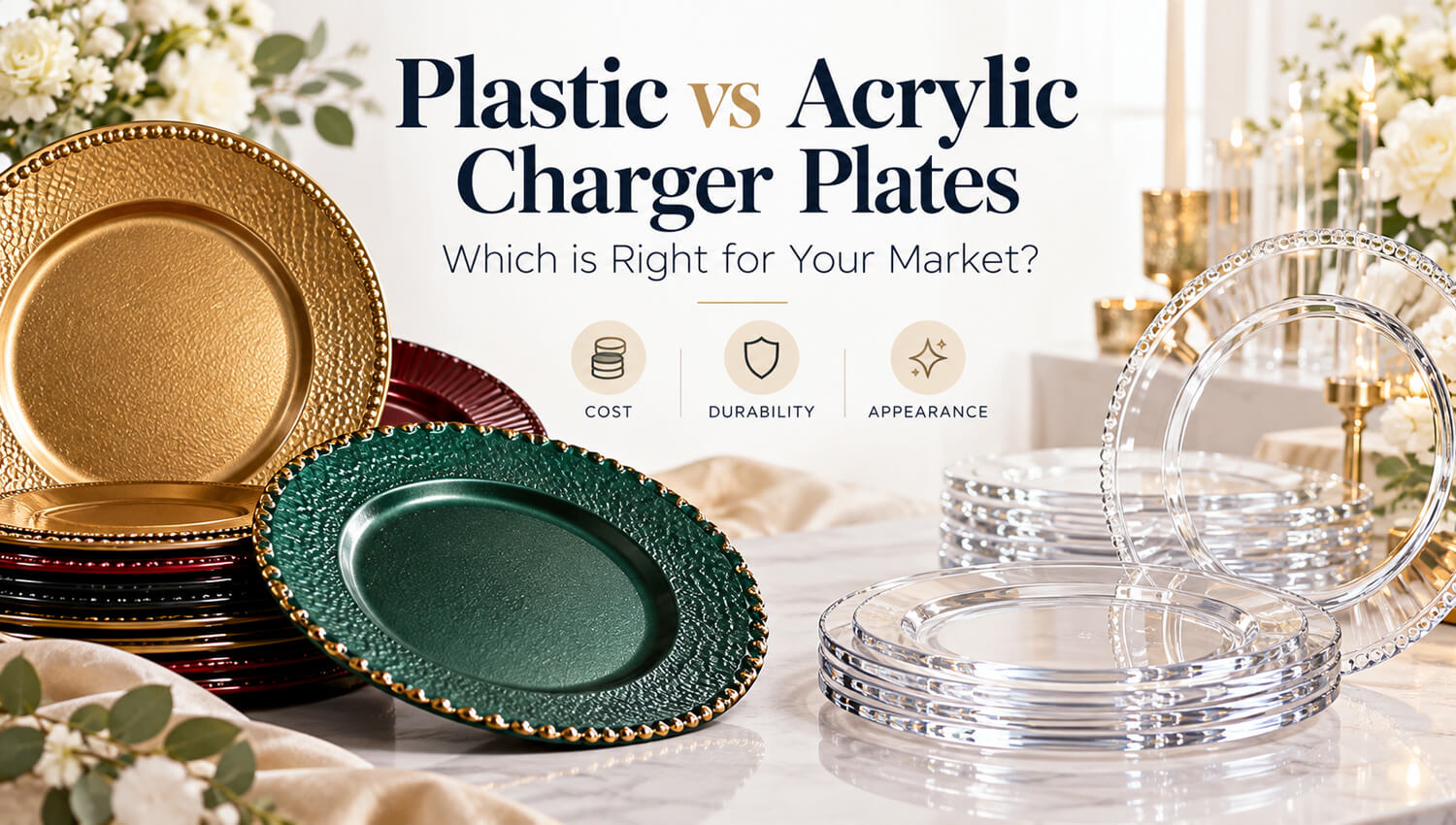
Plastic charger plates represent the largest segment of today’s global charger plate market. Their combination of affordability, versatility, lightweight construction, and attractive appearance makes them the preferred choice for wholesalers, event rental companies, retailers, hotels, and hospitality distributors worldwide.
Modern manufacturing technology has dramatically improved plastic charger plates over the past decade. High-quality products now closely resemble glass, ceramic, or metal while offering much better resistance to breakage during transportation and commercial use. This makes plastic chargers especially valuable for businesses managing large inventories or international shipments.
Several plastic materials are commonly used, each with distinct advantages:
| Material | Advantages | Best Applications |
|---|---|---|
| Polypropylene (PP) | Lightweight, durable, recyclable | Wholesale, restaurants |
| Polystyrene (PS) | Excellent detail, glossy appearance | Wedding décor, retail |
| Acrylic | Crystal-clear luxury look | Premium events |
| PET | Recyclable, transparent | Disposable luxury events |
Plastic charger plates are also highly customizable. Manufacturers can produce thousands of color combinations using Pantone matching systems, making it easy for brands to develop exclusive product lines. Decorative options include gold rims, silver rims, beaded edges, embossed floral patterns, vintage textures, geometric designs, marble printing, wood grain effects, and metallic electroplated finishes.
From a manufacturing perspective, injection molding ensures excellent dimensional consistency and fast production cycles. After molding, products may receive vacuum metallization, UV coating, spray painting, hot stamping, or electroplating to achieve luxurious visual effects while maintaining cost efficiency.
For B2B buyers, plastic charger plates also reduce logistics expenses. Their lighter weight lowers shipping costs compared with glass or ceramic alternatives. They are easier to stack safely, resulting in higher container utilization and reduced freight costs per unit.
Another major advantage is durability. Premium plastic charger plates resist cracking under normal commercial use, making them suitable for banquet rentals where products are transported and cleaned repeatedly. High-quality UV coatings also improve scratch resistance and help preserve the decorative finish after multiple cleaning cycles.
As consumer preferences continue evolving, many manufacturers now incorporate recycled materials and environmentally responsible production methods into plastic charger plate manufacturing. This helps brands satisfy growing demand for sustainable products without sacrificing performance or design flexibility.
For wholesalers, importers, and hospitality suppliers seeking the best balance of price, appearance, customization, and durability, plastic charger plates remain one of the most practical and profitable product categories available today.
Glass Charger Plates
Glass charger plates are widely recognized for their refined appearance and timeless elegance. They are a popular choice for luxury hotels, upscale restaurants, premium wedding venues, and fine dining establishments that want to create an unforgettable table presentation. While they generally cost more than plastic alternatives, glass charger plates offer exceptional visual appeal that enhances the perceived value of any dining experience.
Manufacturers produce glass charger plates using high-quality molded or pressed glass. Some premium collections are handcrafted, allowing each piece to feature unique textures or artistic patterns. Tempered glass is often preferred because it provides greater strength and improved resistance to thermal shock compared to standard glass.
Several styles dominate the market today:
| Style | Features | Ideal Customers |
|---|---|---|
| Clear Glass | Clean, timeless appearance | Luxury restaurants |
| Frosted Glass | Soft matte finish | Wedding planners |
| Colored Glass | Rich decorative colors | Home décor retailers |
| Textured Glass | Embossed or patterned surface | Hotels and banquet halls |
| Metallic Glass | Gold or silver decorative coating | Premium event companies |
Glass charger plates are extremely versatile from a design perspective. Decorative techniques include embossed floral patterns, geometric textures, crackled finishes, hand-painted borders, metallic rims, and translucent colors. These details allow event designers to create sophisticated tablescapes for weddings, gala dinners, and corporate events.
However, glass products require careful handling. Although tempered glass improves durability, it remains heavier and more fragile than plastic. Manufacturers typically use reinforced foam packaging, protective dividers, and heavy-duty export cartons to minimize breakage during international transportation.
Cleaning is another advantage. Glass charger plates resist staining and maintain their glossy appearance over many years when properly cared for. Most are easy to wipe clean after use, making them suitable for repeated commercial applications.
For B2B buyers, the higher purchase price is often justified by stronger customer demand in premium hospitality markets. Hotels and luxury venues frequently choose glass because it reflects light beautifully and complements fine china, crystal glassware, and elegant centerpieces.
When sourcing glass charger plates, buyers should evaluate production consistency, edge finishing quality, coating durability, packaging methods, and factory quality control procedures to ensure long-term customer satisfaction.
Metal Charger Plates
Metal charger plates bring a luxurious and sophisticated appearance that immediately elevates formal dining settings. They are commonly found in five-star hotels, luxury banquet venues, executive dining rooms, cruise ships, and exclusive event spaces where premium presentation is essential.
Unlike everyday dinnerware, metal charger plates are primarily decorative. Their reflective surfaces create an upscale atmosphere while providing excellent durability for commercial use.
The most common materials include:
- Stainless steel
- Aluminum alloy
- Iron with decorative coating
- Brass-finished steel
- Copper-colored alloy
Each material offers different advantages. Stainless steel provides excellent corrosion resistance and long service life. Aluminum is lightweight and easier to transport, while decorative brass or copper finishes create an elegant vintage appearance.
One of the greatest strengths of metal charger plates is durability. Unlike glass, they rarely crack or chip during transportation. They also withstand repeated commercial use in hotels and rental businesses, making them a worthwhile long-term investment.
Manufacturers offer numerous decorative finishes, including:
- Mirror polish
- Brushed metal
- Antique bronze
- Matte black
- Gold electroplating
- Rose gold
- Champagne gold
- Hammered texture
These finishes allow wholesalers to target various customer segments, from classic luxury to contemporary minimalist dining.
Production typically involves metal stamping, precision forming, polishing, surface treatment, and protective coating. High-quality factories also apply anti-fingerprint finishes to maintain a clean appearance during events.
Although metal charger plates are more expensive than plastic, they provide outstanding longevity and premium aesthetics. They are particularly attractive to buyers serving luxury hospitality clients who value durability and elegant presentation over low initial cost.
Wooden Charger Plates
Wooden charger plates have become increasingly popular as hospitality businesses embrace natural materials and sustainable dining concepts. Their warm appearance creates a welcoming atmosphere that complements rustic weddings, outdoor events, boutique hotels, eco-friendly restaurants, and farmhouse-inspired table settings.
Unlike highly polished metallic chargers, wooden charger plates offer natural beauty. Every piece displays unique wood grain patterns, making each charger slightly different from the next. This individuality appeals to designers looking for authentic decorative elements.
Common materials include:
| Wood Type | Characteristics | Typical Applications |
|---|---|---|
| Acacia | Rich grain, durable | Restaurants |
| Mango Wood | Sustainable, decorative | Hotels |
| Bamboo | Fast renewable resource | Eco-friendly events |
| Rubberwood | Affordable and stable | Wholesale markets |
| MDF with Veneer | Cost-effective | Retail decoration |
Manufacturers carefully dry, cut, sand, and seal wooden charger plates before applying protective coatings. Moisture-resistant finishes help prevent warping while preserving the natural appearance of the wood.
Wooden chargers pair beautifully with linen napkins, ceramic dinnerware, and greenery-based table decorations. They are particularly popular in outdoor weddings, vineyard events, mountain resorts, and boutique hospitality venues.
Customization options include:
- Laser engraved logos
- Custom stain colors
- Burned edge effects
- Engraved patterns
- Custom diameters
- Personalized packaging
One consideration for buyers is maintenance. Wooden charger plates should not remain submerged in water for extended periods. Gentle cleaning with a damp cloth helps preserve their finish and extends their service life.
For businesses seeking environmentally conscious product collections, responsibly sourced wood or certified bamboo offers excellent marketing advantages while supporting sustainable purchasing initiatives.
Ceramic and Porcelain Charger Plates
Ceramic and porcelain charger plates represent classic elegance. Their substantial weight, smooth finish, and refined craftsmanship make them favorites among luxury restaurants, fine dining establishments, and premium hospitality brands.
Although more fragile than plastic or metal, ceramic chargers provide unmatched sophistication that complements formal table settings.
Porcelain is fired at higher temperatures than traditional ceramic, resulting in greater density and lower water absorption. This produces a smoother surface with improved strength and excellent resistance to staining.
Popular decorative styles include:
- White minimalist
- Gold rim
- Marble finish
- Floral hand painting
- Embossed textures
- Contemporary matte
- Vintage-inspired collections
Premium manufacturers often combine traditional craftsmanship with modern production technologies. Automated molding ensures dimensional consistency, while skilled artisans may complete decorative painting or glazing by hand.
Ceramic charger plates perform exceptionally well in luxury restaurants where elegant presentation supports premium dining experiences. They also photograph beautifully, making them attractive for wedding venues and event planners promoting their services online.
However, shipping ceramic products requires careful packaging. Foam inserts, molded pulp protection, and reinforced export cartons help reduce breakage during international transportation.
For wholesalers serving upscale customers, ceramic and porcelain collections remain valuable additions to premium product catalogs because they offer lasting beauty and strong perceived value.
Melamine Charger Plates
Melamine charger plates combine durability, practicality, and attractive design, making them an excellent solution for high-volume commercial food service operations. Unlike disposable products, melamine chargers are designed for repeated use while maintaining their appearance over many years.
Manufactured from durable melamine resin, these charger plates resist impact better than ceramic while remaining significantly lighter than glass. This makes them especially popular among catering companies, hotels, cruise operators, schools, hospitals, and banquet facilities.
Advantages include:
- Break-resistant construction
- Lightweight handling
- Excellent scratch resistance
- Easy cleaning
- Long service life
- Lower replacement costs
Manufacturers produce melamine charger plates in hundreds of decorative finishes that imitate porcelain, marble, stone, wood, and metallic surfaces. Modern printing technologies make these designs highly realistic.
Because melamine is suitable for demanding commercial environments, many hospitality buyers appreciate its balance between appearance and performance. Staff can transport large quantities safely while reducing accidental breakage during busy banquet operations.
When selecting melamine charger plates, B2B buyers should verify compliance with food-contact regulations and ensure products meet applicable international quality standards for commercial dining applications.
Disposable Charger Plates
Disposable charger plates have become a practical solution for large-scale events where convenience, hygiene, and cost control are top priorities. Catering companies, wedding planners, banquet organizers, party rental businesses, and event wholesalers often choose disposable charger plates because they eliminate the need for washing, storage, and replacement of damaged inventory.
Modern disposable charger plates are very different from basic paper products. Manufacturers now produce elegant disposable chargers that closely resemble plastic, glass, or metallic charger plates. Many premium disposable designs feature embossed patterns, gold or silver rims, marble finishes, textured surfaces, and mirror-like coatings that create a sophisticated table presentation.
The most common disposable materials include:
| Material | Advantages |
|---|---|
| Paperboard | Affordable and recyclable |
| Foil-coated paper | Elegant metallic appearance |
| PET plastic | Transparent and lightweight |
| Biodegradable fiber | Eco-friendly alternative |
| Compostable molded pulp | Sustainable event solution |
For B2B buyers, disposable charger plates offer several operational benefits. They reduce labor costs because staff do not need to collect, wash, and repack products after events. They also eliminate breakage losses, which can be significant when using glass or ceramic charger plates for large weddings or banquets.
Premium disposable charger plates are particularly popular for:
- Wedding receptions
- Corporate banquets
- Holiday events
- Outdoor catering
- Festivals
- Luxury disposable tableware collections
Manufacturers can customize disposable charger plates with unique colors, printed logos, embossed branding, and special packaging for private label programs. Retailers often purchase seasonal collections for Christmas, Thanksgiving, Easter, and wedding seasons.
As sustainability becomes increasingly important, many manufacturers now offer biodegradable and compostable disposable charger plates made from renewable materials. These products help hospitality businesses meet environmental goals while maintaining attractive table presentation.
Luxury Decorative Finishes for Charger Plates
Decorative finishes are often the deciding factor that attracts customers and increases the perceived value of charger plates. While the base material provides structure and durability, the surface finish creates the visual impact that guests notice immediately.
Manufacturers use advanced coating and decoration technologies to transform ordinary charger plates into luxury decorative products suitable for premium hospitality markets.
The most popular decorative finishes include:
| Finish Type | Visual Effect |
|---|---|
| Gold rim | Classic luxury appearance |
| Silver rim | Elegant formal dining |
| Rose gold | Modern wedding décor |
| Beaded edge | Traditional decorative style |
| Hammered texture | Handcrafted artisan look |
| Marble finish | Contemporary luxury design |
| Mirror finish | Reflective premium effect |
| Matte coating | Modern minimalist elegance |
Gold and silver rims remain the strongest sellers in many international markets because they complement both classic and contemporary table settings. Wedding planners frequently select metallic finishes that coordinate with centerpieces, candle holders, and glassware.
Manufacturing techniques vary depending on the finish. Vacuum metallization creates highly reflective metallic surfaces, while electroplating produces durable gold or silver coatings. UV printing allows realistic marble patterns, wood textures, and artistic graphics. Embossing adds dimensional patterns that can be both seen and felt.
For OEM and ODM buyers, decorative finishes provide opportunities for product differentiation. Exclusive color combinations, custom textures, and proprietary patterns help brands avoid direct price competition with standard products.
Durability testing is especially important for luxury finishes. High-quality coatings should resist scratching, fading, peeling, and discoloration after repeated cleaning and transportation. Reliable manufacturers conduct adhesion tests, abrasion resistance tests, and aging tests before mass production.
The right decorative finish can significantly increase retail value and improve profit margins for wholesalers and distributors serving premium hospitality customers.
Manufacturing Process of Charger Plates
Understanding how charger plates are manufactured helps B2B buyers evaluate supplier capabilities, product quality, and production consistency. Although production methods vary by material, most commercial charger plates follow a structured manufacturing process designed for large-scale international supply.
The production process typically includes several key stages.
Material Selection
The process begins with selecting appropriate raw materials. Manufacturers choose food-safe plastics, high-quality glass, metal alloys, wood, ceramic clay, or melamine resin depending on the product category. Material quality directly affects durability, appearance, and compliance with international regulations.
Mold Development
Precision molds are created based on product dimensions and decorative designs. High-quality molds ensure consistent thickness, accurate diameters, clean edges, and detailed decorative patterns throughout mass production.
Primary Production
Different materials require different production methods:
- Plastic: injection molding
- Glass: molding and tempering
- Metal: stamping and forming
- Wood: cutting and machining
- Ceramic: molding and kiln firing
- Melamine: compression molding
Surface Decoration
After forming, charger plates receive decorative treatments such as:
- Vacuum metallization
- Electroplating
- UV printing
- Spray painting
- Hot stamping
- Embossing
- Protective clear coating
Quality Control
Professional factories inspect products for:
- Dimensional accuracy
- Surface defects
- Color consistency
- Coating adhesion
- Scratch resistance
- Edge smoothness
- Packaging quality
Packaging and Export Preparation
Export packaging usually includes protective bags, foam separators, inner cartons, master cartons, pallets, and shipping marks designed for international transportation.
Experienced manufacturers also implement batch traceability systems, allowing buyers to identify production dates, raw material batches, and inspection records if quality issues arise later.
For importers and wholesalers, visiting the factory or requesting production videos can provide valuable insight into manufacturing standards and operational capabilities.
Customization Options for OEM & ODM Buyers
Customization is one of the most important advantages of sourcing charger plates directly from manufacturers. OEM and ODM services allow wholesalers, retailers, hospitality brands, and event companies to develop exclusive product collections that strengthen brand identity and improve market competitiveness.
Manufacturers typically offer a wide range of customization options.
Logo Branding
- Printed logos
- Embossed logos
- Laser engraving
- Foil stamping
- Molded brand marks
Color Customization
Factories can match specific Pantone colors, create custom metallic finishes, develop seasonal color collections, and produce exclusive brand colors for private label customers.
Size Customization
Standard charger plates are usually 13 inches, but manufacturers can develop custom diameters, thicknesses, edge profiles, and special shapes for unique product lines.
Decorative Design Development
OEM buyers can create exclusive:
- Floral patterns
- Geometric designs
- Marble effects
- Vintage textures
- Luxury metallic combinations
- Holiday collections
- Cultural or regional themes
Packaging Customization
Private label packaging options include:
- Color gift boxes
- Retail display packaging
- Barcode labeling
- Brand inserts
- Protective export packaging
- E-commerce packaging
- Pallet optimization
New Mold Development
For large-volume buyers, manufacturers can develop completely new charger plate molds that are exclusive to one customer. This provides stronger product differentiation and protects against direct market competition.
Before starting OEM production, manufacturers usually provide digital artwork, 3D renderings, physical samples, and production approvals. This helps buyers verify colors, finishes, and decorative details before mass production begins.
Clear technical specifications, approved samples, and detailed production agreements are essential for successful long-term OEM partnerships.
How to Choose the Right Types of Charger Plate for Your Business
Selecting the right charger plate requires balancing appearance, durability, target market, and overall business strategy. The best product for a luxury hotel may not be the best choice for a discount retailer or a high-volume event rental company.
The first factor is your target customer.
- Luxury hotels: glass, metal, or porcelain
- Wedding planners: decorative plastic or glass
- Restaurants: melamine or plastic
- Event rentals: durable plastic or melamine
- Retail stores: seasonal plastic collections
- Eco-conscious brands: wood or biodegradable products
Budget also plays a major role.
| Material | Relative Cost |
|---|---|
| Disposable | Very Low |
| Plastic | Low |
| Melamine | Medium |
| Wood | Medium |
| Glass | High |
| Metal | High |
| Porcelain | Premium |
Importers should also consider shipping costs. Lightweight plastic products generally offer lower freight costs and higher container efficiency than glass or ceramic alternatives.
Minimum order quantity (MOQ) is another important consideration. Custom colors and exclusive designs often require larger production quantities, while standard catalog products usually have lower MOQs.
Before placing large orders, request production samples, verify packaging quality, evaluate coating durability, review factory certifications, and confirm delivery schedules.
A reliable manufacturer should provide transparent communication, consistent quality control, customization support, and strong export experience for international B2B buyers.
Quality Standards and International Certifications
Quality standards are critical when purchasing charger plates for international markets. Compliance with food-contact regulations and product safety requirements helps protect your business from legal issues, customer complaints, and import restrictions.
Reputable manufacturers often comply with standards such as:
- FDA food-contact regulations
- REACH chemical compliance
- LFGB food safety standards
- SGS testing reports
- ISO quality management systems
- BSCI or social compliance audits
Buyers should request laboratory test reports, material specifications, and production quality documentation before confirming large orders.
Independent third-party testing provides additional confidence that products meet international safety and performance requirements.
Global Market Trends and Future Innovations
The charger plate industry continues evolving as hospitality businesses seek products that combine luxury appearance, durability, and environmental responsibility.
Current market trends include:
- Recycled plastic charger plates
- Biodegradable disposable products
- Matte luxury finishes
- Marble and stone-inspired textures
- Minimalist Scandinavian designs
- Sustainable packaging
- Smart manufacturing and automation
Manufacturers are investing heavily in eco-friendly materials, advanced coating technologies, and customized production systems that allow smaller order quantities with greater design flexibility.
Businesses that source innovative, sustainable, and well-designed charger plates are often better positioned to meet changing consumer expectations and premium hospitality demands.
For additional hospitality tableware guidance, organizations such as the National Restaurant Association provide useful industry resources and best practices: https://restaurant.org .
Frequently Asked Questions
What is the most popular charger plate material for wholesale buyers?
Plastic charger plates remain the most popular choice because they offer an excellent balance of affordability, durability, lightweight shipping, and extensive design options. They are widely used by wholesalers, event companies, retailers, and hospitality distributors.
Are charger plates safe for direct food contact?
Many charger plates are designed primarily for decorative use and should not be used for serving food directly. Buyers should always verify food-contact certifications such as FDA, LFGB, or other applicable safety standards with the manufacturer.
Which charger plate material is best for hotels?
Hotels often prefer glass, porcelain, or premium metal charger plates because these materials create a luxurious dining atmosphere and enhance the overall guest experience. High-end plastic collections are also increasingly popular for banquet operations.
Can manufacturers create custom charger plate designs?
Yes. Most professional manufacturers offer OEM and ODM services including custom colors, logos, decorative patterns, sizes, packaging, and exclusive mold development for private label and branded product collections.
What decorative finish is currently trending in international markets?
Matte metallic finishes, marble patterns, champagne gold coatings, and minimalist textured surfaces are among the strongest trends in both hospitality and home décor markets, particularly for wedding and luxury event applications.
How should charger plates be packaged for international shipping?
Professional export packaging typically includes individual protective bags, foam or paper separators, reinforced inner cartons, heavy-duty master cartons, and palletized loading to minimize breakage and surface damage during ocean or air transportation.
Conclusion
Choosing among the various Types of Charger Plate is not simply a matter of style. For B2B buyers, the decision affects product positioning, logistics costs, customer satisfaction, and long-term profitability.
Plastic charger plates provide outstanding versatility and cost efficiency. Glass and porcelain create premium luxury experiences. Metal offers exceptional durability and elegance. Wood supports sustainable and rustic dining concepts. Melamine delivers commercial performance, while disposable charger plates provide convenience for large-scale events.
Successful wholesalers, importers, distributors, and hospitality suppliers evaluate materials, decorative finishes, manufacturing quality, certifications, customization capabilities, and supplier reliability before making purchasing decisions.
By working with an experienced manufacturer that offers strong quality control, OEM and ODM support, international compliance, and professional export packaging, you can build a charger plate collection that meets market demand, strengthens your brand, and creates long-term business value for your customers.