For most B2B buyers, plastik to'ldiruvchi plastinkalar are more practical for bulk purchasing because they are lightweight, durable, easier to customize, and more cost-efficient to ship. Glass charger plates, however, offer a heavier feel and a more traditional premium appearance.
The right choice depends on your target customers, application, budget, shipping costs, and expected handling frequency. For wholesalers, event suppliers, hotels, rental companies, and private-label brands, it is important to compare not only appearance and unit price, but also breakage risk, packaging, freight, storage, customization, and replacement costs.
This guide compares plastic and glass charger plates from a practical B2B sourcing perspective, helping you choose the material that delivers the best balance of presentation, durability, and total purchasing cost.
Quick Buyer Comparison
| Purchasing Factor | Plastic Charger Plate | Glass Charger Plate |
| Breakage resistance | Excellent | Moderate to low |
| Product weight | Yengil | Heavy |
| Freight efficiency | Excellent | Lower |
| Design flexibility | Excellent | Good |
| Premium feel | Good to excellent | Excellent |
| Color selection | Very wide | Moderate |
| Custom molding | Easier | More complex |
| Bulk-event handling | Excellent | Moderate |
| Protective packaging needs | Lower | Yuqori |
| Typical B2B price positioning | Value to premium | Mid-range to premium |
The key lesson is simple: don’t choose only by appearance or unit price. Calculate how the charger plate performs throughout its complete commercial life.
Understanding Plastic and Glass Charger Plate Materials
Although two charger plates may look similar in a product photograph, their manufacturing processes can be very different.
Plastic charger plates can be produced from several polymers depending on the design, performance requirement, target price, and production process. Polystyrene-based materials are commonly suited to rigid decorative products because they can reproduce detailed patterns and smooth surfaces. Other plastic materials may be selected where flexibility, impact behavior, transparency, or specific performance characteristics are required.
The material is only one part of the product.
A plastic charger plate can also receive:
- metallic coating;
- sprayed color;
- electroplated-style finishes;
- printed patterns;
- transparent effects;
- embossed borders;
- bead designs;
- wood-grain or marble effects;
- matte or glossy finishes.
This gives a manufacturer considerable freedom to create different collections using similar production systems.
Glass charger plates are fundamentally different. Their value often comes from transparency, weight, surface depth, and a naturally solid feel. Decorative treatments can include colors, textures, painted details, metallic rims, and patterns.
Glass usually communicates a more traditional premium impression when held in the hand. Plastic, however, can offer more design freedom at lower weight.
From a sourcing perspective, buyers should therefore avoid specifications such as simply:
“We need a 13-inch gold charger plate.”
That description isn’t enough.
A professional RFQ should define diameter, material, weight target, edge design, finish, color reference, packaging, intended market, annual quantity, logo requirement, and performance expectations.
For plastic products, it is also useful to ask whether the finish is molded directly into the design or added during a secondary finishing process. Secondary coatings can create attractive visual effects, but their quality depends on surface preparation, production control, curing, packaging, and intended cleaning method.
For glass products, buyers should pay closer attention to edge quality, bubbles, surface defects, dimensional consistency, packing protection, and breakage expectations.
The right material therefore starts with the product specification, not merely the product photograph.
Durability and Breakage: Which Material Handles Commercial Use Better?
Durability is one of the strongest arguments in favor of plastic charger plates.
Think about what happens after the factory packs the product. Cartons are loaded, unloaded, palletized, transported, opened, stacked, displayed, rented, collected, cleaned, moved again, and stored. In an event-rental business, one plate may pass through this cycle many times.
Every handling stage creates risk.
Glass can perform well when carefully handled, but impact against a hard floor, table edge, another plate, or metal cart can cause cracking or complete breakage. This doesn’t necessarily make glass unsuitable. It simply means buyers need to include breakage management in their cost calculations.
Plastic behaves differently. A rigid plastic charger plate can still crack when badly abused, and its decorated surface may scratch if plates are handled incorrectly. Yet catastrophic breakage is generally much less of an operational concern.
Consider an event business managing hundreds of tables every weekend.
Staff efficiency matters. Workers need to move stacks quickly. Products may travel between warehouses, trucks, venues, hotels, and banquet halls. A lighter and less fragile plate can make those operations simpler.
However, durability isn’t just about whether a plate breaks.
Buyers should evaluate:
Impact resistance: Can the plate survive routine drops and knocks?
Scratch resistance: What happens when plates are stacked repeatedly?
Coating adhesion: Does the decorative surface remain stable after normal handling?
Edge strength: Are decorative borders vulnerable to chips or cracks?
Shape stability: Does the plate remain flat under normal storage conditions?
Cleaning resistance: Can its finish tolerate the intended cleaning process?
For bulk plastic orders, we recommend testing actual production samples rather than approving a product solely from photographs.
Try a basic handling simulation. Stack the samples. Separate them repeatedly. Wipe them using the planned cleaning method. Put dinner plates on them. Inspect the high points of embossed patterns for scratches.
A charger plate that survives real operating conditions will usually create more value than one that only looks impressive during sample approval.
Appearance and Table Presentation
Glass has an obvious strength: it naturally feels substantial.
Its weight and optical characteristics can help create an elegant table setting. Clear glass, tinted glass, patterned glass, and metallic-edge designs are especially suitable for luxury dining, upscale weddings, formal banquets, and premium hospitality environments.
But plastic has changed significantly from the simple disposable-looking decorative plates many buyers remember.
Modern molding and finishing allow plastic charger plates to imitate a wide range of visual styles.
Popular possibilities include:
- hammered metal effects;
- antique gold;
- champagne gold;
- silver;
- rose gold;
- transparent crystal styles;
- pearl finishes;
- woven patterns;
- beaded borders;
- scalloped edges;
- irregular organic shapes;
- wood textures;
- marble prints;
- mirror-style surfaces.
This flexibility is valuable for B2B buyers because tableware fashion changes.
Wedding planners may want champagne gold this season and pearl white next season. Home décor retailers may need seasonal collections. Rental companies may need several styles that work across different event themes.
Creating those assortments with plastic can be commercially attractive.
Visual Positioning Chart
| Market Position | Plastik | Shisha |
| Budget events | Besh yulduz | ★★ |
| Mainstream weddings | Besh yulduz | ★★★★ |
| Luxury weddings | ★★★★ | Besh yulduz |
| Hotel banquets | ★★★★ | ★★★★ |
| Rental businesses | Besh yulduz | ★★★ |
| Home décor retail | Besh yulduz | ★★★★ |
| High-end formal dining | ★★★ | Besh yulduz |
Scores are a general sourcing guide rather than a universal product rating. Product design, finish, thickness, brand positioning, and customer expectations can change the result.
The most important point for a buyer is perceived value.
A well-designed plastic charger doesn’t need to compete by pretending to be glass. It can succeed because it delivers an attractive table presentation with lower weight and greater design freedom.
Buyers should therefore compare finished products at normal table-viewing distance, not only examine individual plates in their hands.
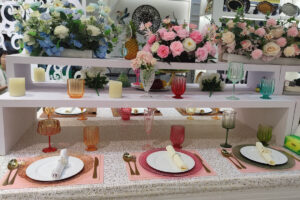
Place a dinner plate, napkin, cutlery, glassware, and centerpiece around the charger. That’s how your final customer will actually experience the product.
Weight, Packing, Shipping, and Warehouse Efficiency
This is where the B2B comparison becomes much more interesting.
International buyers don’t purchase a charger plate only at the factory gate. They need to move it from the production line to a warehouse, distribution center, retail store, hotel, or event venue.
Weight affects almost every step.
Glass products normally require greater protection against impact. Packaging may include stronger dividers, foam, molded protection, additional cartons, or other protective structures depending on the design.
More protection can mean more packaging volume.
Plastic plates are lighter and less vulnerable to catastrophic impact damage. This can give suppliers and buyers more freedom when developing bulk packaging.
For importers, the difference matters because your true purchasing cost includes:
Factory price + inner packaging + export carton + inland transportation + international freight + insurance + customs costs + warehouse handling + damaged products + replacement costs.
This is your total landed cost.
A lower factory price doesn’t always create the lowest landed cost. Likewise, a higher-priced product can sometimes deliver better overall economics if it packs efficiently and has fewer losses.
Warehouse operations also deserve attention.
Imagine employees carrying stacks of charger plates between storage racks and packing tables throughout the day. Product weight affects handling speed and worker effort. The difference becomes even more noticeable for event-rental companies that repeatedly transport hundreds or thousands of chargers.
Buyers should ask suppliers for:
- individual product weight;
- pieces per inner carton;
- pieces per export carton;
- carton dimensions;
- gross weight;
- net weight;
- pallet configuration if required;
- estimated container loading quantity.
Use those figures to compare suppliers fairly.
A quotation showing only FOB price per piece gives you an incomplete picture.
For large orders, ask the supplier to redesign packaging if necessary. Sometimes changing the stacking method, separator design, or pieces per carton can improve container utilization while still protecting the surface.
That kind of packaging engineering can create savings long after the product leaves the factory.
Plastic vs Glass Charger Plates Cost Comparison
When buyers ask, “Which one is cheaper?” the answer seems obvious at first. In many standard designs, plastic is positioned more competitively for volume purchasing.
Yet professional procurement requires a deeper calculation.
Suppose two products have different unit prices. Product A costs less to buy but requires expensive protective packaging. Product B costs slightly more but weighs much less, packs efficiently, and has a lower replacement rate.
Which one costs less?
You can’t know until you calculate the entire supply chain.
Total Cost Comparison Framework
| Cost Factor | Plastik | Shisha |
| Typical factory acquisition cost | Lower | Yuqori |
| Protective packaging requirement | Moderate | Yuqori |
| Freight weight | Past | Yuqori |
| Breakage allowance | Past | Yuqori |
| Warehouse handling | Easy | More demanding |
| Replacement management | Lower | Yuqori |
| Custom design economics | Strong at volume | Depends on process |
| Premium retail potential | Good | Very good |
The unit price also changes according to product specifications.
For plastic charger plates, important cost drivers can include diameter, product weight, resin selection, mold complexity, finish, number of colors, surface decoration, packaging, order volume, and whether a new mold is needed.
A heavily embossed charger with a premium decorative coating won’t cost the same as a simple smooth plate.
Glass pricing is also influenced by size, weight, thickness, decoration, edge treatment, quality requirements, packaging protection, and production quantity.
A Better Purchasing Formula
Instead of asking:
“What is your lowest price?”
Ask:
“What specification gives me the lowest total landed cost while maintaining my target appearance and quality?”
That’s a much stronger B2B question.
For wholesalers and importers competing in mid-market price ranges, plastic often gives more room for margin because you can combine attractive styling with shipping efficiency.
For luxury hospitality customers willing to pay for extra weight and material feel, glass may justify its additional cost.
Neither decision should be based on purchase price alone.
Your target selling price, expected gross margin, annual replacement requirements, shipping destination, customer segment, and inventory turnover should all influence the final material choice.
Safety, Food Contact, and Quality Requirements
Charger plates are generally used beneath dinnerware as decorative base plates rather than as the main surface from which food is eaten. However, buyers should never assume that every market treats every product application in exactly the same way.
Your intended use matters.
If a plastic product is designed or marketed for direct food contact, the materials and intended conditions of use become important regulatory questions. The U.S. FDA states that substances used in food-contact applications may be subject to authorization or applicable food-contact regulations depending on their use.
The European Commission similarly states that materials intended to contact food must comply with EU food-safety requirements, and plastics intended for food contact are subject to specific rules, including Commission Regulation (EU) No 10/2011.
Buyers selling into regulated markets can review the FDA food-contact guidance when defining their requirements.
The practical lesson is straightforward: tell the manufacturer exactly how the product will be used.
Don’t simply ask whether a plate is “FDA approved” or “food safe” without defining the intended application. Regulatory suitability depends on material, substance, use conditions, market, and product construction.
For decorative charger plates, your quality-control specification should also cover non-regulatory issues.
A useful inspection checklist may include:
- diameter tolerance;
- product weight;
- flatness;
- color consistency;
- visible black spots or contamination;
- molding marks;
- scratches;
- coating defects;
- missing paint;
- edge defects;
- warping;
- carton quantity;
- barcode accuracy;
- packaging strength.
One problem B2B purchasers sometimes encounter is approving a perfect golden sample while mass production shows noticeable shade variation.
Color limits should therefore be defined before production.
For custom colors, supplying a Pantone reference can help communication, although actual appearance can still depend on material, coating, gloss level, lighting, and production method.
Quality isn’t created during final inspection. It should be controlled from material preparation through molding, finishing, packing, and shipment.
Sustainability and Product Life Cycle
The sustainability discussion around plastic and glass is more complicated than saying “glass is environmentally friendly” or “plastic uses less energy to ship.”
Both claims oversimplify the problem.
The U.S. Environmental Protection Agency recommends considering materials from a broader life-cycle perspective rather than assuming one packaging material is universally environmentally preferable. Recycling benefits include conserving resources and reducing the need for new raw-material extraction, but recycling systems and outcomes vary by material and location.
For charger plates, buyers should consider at least four stages:
Material production → manufacturing → transportation → use and end of life.
Glass has important advantages. It can be recyclable where suitable collection and recycling infrastructure exists, and a durable glass charger may remain in service for years when handled carefully.
Plastic has different advantages. Its lower weight can reduce transport burden, and a durable reusable plastic charger may serve many events before replacement.
That word—reusable—matters.
A charger intended for repeated commercial use shouldn’t automatically be evaluated in the same way as a single-use product.
For B2B procurement, sustainability questions can include:
- How many times is the product expected to be reused?
- Can damaged products be recycled locally?
- What material identification information is available?
- Can unnecessary packaging be removed?
- Can carton dimensions be optimized?
- Can recycled-content materials be considered where technically and legally appropriate?
- How often will products need replacement?
- How far will they travel?
EPA also emphasizes reuse and recyclable containers as ways to reduce plastic waste.
For brands building a sustainability strategy, it is safer to make specific, supportable claims rather than broad statements such as “100% eco-friendly.”
For example:
“Designed for repeated event use” is clearer than “environmentally harmless.”
Similarly, buyers can request packaging optimization, fewer plastic bags, recyclable cartons, or consolidated bulk packaging where the product still receives enough surface protection.
Sustainable purchasing isn’t only about selecting one material.
It’s about designing a better product system.
Customization, OEM, and Private Label Opportunities
For B2B buyers building a collection rather than purchasing a single generic item, customization can strongly favor plastic.
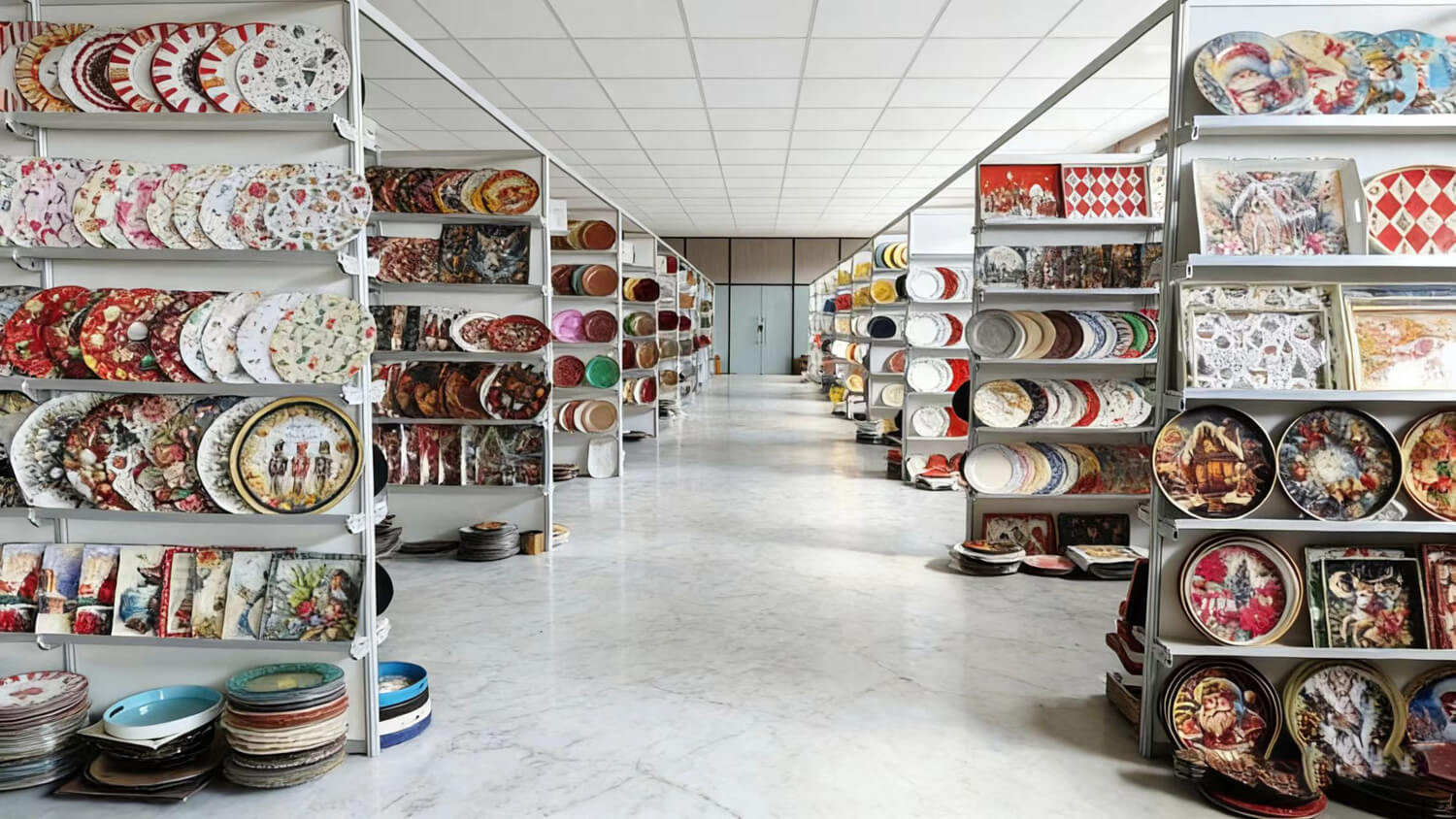
Injection molding and secondary decoration allow manufacturers to create a wide range of visual concepts. Once the product structure and tooling are suitable, different colors and finishes may help an importer develop multiple SKUs around one general design language.
Customization can include:
- custom diameter;
- custom border patterns;
- embossed textures;
- logo embossing;
- custom colors;
- transparent designs;
- metallic finishes;
- matte finishes;
- printed patterns;
- private-label cartons;
- barcode labels;
- retail boxes;
- master-carton marks.
This makes plastic especially attractive for wholesalers, wedding supply brands, home décor companies, supermarket programs, online sellers, and event product distributors.
However, customization should be commercially justified.
Creating a new mold for a customer who purchases a small quantity may not make sense. Modifying packaging, color, labels, or surface decoration can sometimes provide enough differentiation without developing a completely new product.
For OEM projects, a good supplier discussion should begin with your sales strategy.
Tell the manufacturer:
Target market: United States, Europe, Middle East, Latin America, etc.
Customer: wholesaler, retailer, hotel, rental company, wedding planner, or consumer brand.
Target price: your expected wholesale or retail positioning.
Order quantity: initial quantity and expected annual demand.
Product style: classic, modern, luxury, rustic, minimalist, seasonal, or another direction.
Packaging: bulk export packing or retail-ready presentation.
With this information, a manufacturer can recommend a more realistic production solution.
Glass products can also be customized, of course. The difference is that tooling, decorative processes, minimum quantities, packaging, and production economics may make certain glass designs more suitable for larger or higher-value programs.
For brands that frequently refresh colors and styles, plastic generally offers particularly strong flexibility.
Which Charger Plate Material Fits Your Business Model?
The question isn’t simply whether one material is universally better.
The better question is:
Which material fits the way your company makes money?
Event Rental Companies
Plastic is usually highly practical here.
Rental companies repeatedly load, unload, stack, transport, clean, and store their inventory. Lower weight and reduced breakage risk can make daily operations easier.
Glass can still have a role in premium rental collections where customers are willing to pay more for luxury presentation.
Wedding and Party Wholesalers
Plastic is often an excellent match because buyers need multiple colors, styles, and seasonal designs at commercially attractive prices.
Gold, silver, champagne, clear, beaded, rattan-style, rustic, and modern patterns can serve different wedding themes.
Hotels and Banquet Suppliers
The choice depends on positioning.
Large banquet operations may value handling efficiency and durability, favoring plastic. Luxury properties may prefer the solid feel of glass for selected table concepts.
Home Décor Retailers
Both materials can perform well.
Plastic provides wider design freedom and accessible price points. Glass provides stronger premium material perception.
E-commerce Brands
Plastic has another important advantage: parcel shipping.
Selling fragile glass products online can require greater protective packaging and careful fulfillment. Damage claims can also affect customer-service costs.
Importers and Distributors
For broad catalogs, the strongest strategy may not be choosing only one material.
You might use:
- plastic as your volume collection;
- premium plastic as your trend collection;
- glass as your luxury collection.
This creates clear price tiers.
B2B Decision Chart
High-volume wholesale        Plastic  █████
Event rental                 Plastic  █████
Frequent transportation      Plastic  █████
Design customization         Plastic  █████
Premium weight/feel          Glass    █████
Luxury formal presentation   Glass    █████
Lower breakage exposure      Plastic  █████
Shipping efficiency          Plastic  █████
For most high-volume B2B programs, plastic offers the stronger balance between appearance, logistics, customization, and commercial risk.
For premium stationary environments where weight and traditional material perception matter more, glass remains a valuable option.
How B2B Buyers Should Evaluate a Charger Plate Manufacturer
Choosing the right material won’t help much if production control is poor.
Before placing a bulk order, evaluate the supplier’s ability to repeat the approved sample across thousands of pieces.
A professional sourcing process should start with product specifications.
Sample Approval
Approve a physical sample whenever possible.
Check:
- overall appearance;
- diameter;
- weight;
- flatness;
- color;
- gloss;
- border details;
- coating;
- stacking;
- surface scratches;
- packaging.
Photographs can help during early sourcing, but they shouldn’t replace physical evaluation for a major order.
Mass Production Standards
Once the sample is approved, define which characteristics must remain consistent.
A gold finish, for instance, can appear different under warm indoor lighting, daylight, or photography lights. Buyers should agree on a reasonable visual standard before mass production begins.
Packaging Validation
Packaging is part of the product.
Ask whether separators are required. Check whether decorative high points rub against neighboring plates. Test how easily staff can remove and repack them.
For e-commerce products, stronger parcel-shipping tests may be required than for palletized wholesale distribution.
Factory Communication
A capable supplier should ask questions rather than immediately quote every inquiry.
If your RFQ doesn’t specify material, weight, packaging, target market, decoration, or quantity, there may be several possible product configurations.
Clear communication before quotation prevents expensive changes later.
B2B Supplier Checklist
| Question | Why It Matters |
| Can you provide production samples? | Confirms actual construction and finish |
| What material is being used? | Avoids specification misunderstandings |
| Can color be customized? | Supports brand differentiation |
| Is a new mold required? | Affects tooling cost and lead time |
| What is the packing method? | Influences freight and damage risk |
| What is carton gross weight? | Helps calculate logistics costs |
| How is coating quality checked? | Reduces finish complaints |
| Can you support private labels? | Important for branded distribution |
| What inspection standard is used? | Clarifies acceptance requirements |
| Can packaging be customized? | Supports retail and e-commerce programs |
Your supplier should ultimately function as part of your supply chain, not simply as a factory that produces pieces.
Ko'p beriladigan savollar
Are plastic charger plates better than glass charger plates?
For most high-volume events, wholesale programs, and rental operations, plastic is more practical because it is lightweight, difficult to break, easy to transport, and highly customizable. Glass is stronger when premium weight and luxury presentation are priorities.
Do plastic charger plates look cheap?
Not necessarily. Modern plastic chargers can use metallic coatings, transparent finishes, embossing, textured borders, marble effects, and detailed molding. Product design, weight, finish quality, and table styling have greater influence on perceived value than material alone.
Are glass charger plates better for weddings?
Glass works beautifully for luxury weddings and formal events where weight and premium presentation matter. Plastic is often preferred for large weddings because it reduces handling difficulty, transportation weight, breakage risk, and replacement costs.
Which charger plate is better for event rental businesses?
Plastic is generally more suitable for rental businesses because inventory is handled and transported frequently. Lower product weight and reduced breakage exposure can make setup, collection, storage, transportation, and replacement management easier.
Can plastic charger plates be customized for wholesale orders?
Yes. Depending on the manufacturing process and order quantity, buyers may customize colors, finishes, embossed patterns, dimensions, logos, labels, cartons, barcodes, and retail packaging. Completely new structures may require dedicated tooling.
Can food be placed directly on a charger plate?
A charger is normally used beneath dinnerware, but intended use should always be confirmed. Products marketed for direct food contact may need applicable food-contact compliance for the destination market and specific conditions of use.
Which option costs less when importing in bulk?
Plastic often provides a lower total landed cost because of lower weight, efficient packing, and lower breakage exposure. However, buyers should compare factory price, packaging, freight, customs costs, warehousing, damages, and replacement expenses together.
Are glass charger plates more sustainable than plastic?
Not automatically. Environmental performance depends on material production, product lifespan, transportation, reuse, recycling infrastructure, and disposal. EPA recommends considering materials from a life-cycle perspective instead of judging sustainability from material type alone.
What size charger plate should wholesale buyers purchase?
Many charger plate collections are designed to extend beyond the dinner plate so the decorative border remains visible. Buyers should select dimensions according to their dinnerware, target market, table size, packaging requirements, and customer preferences.
What information should I send a manufacturer for a quotation?
Provide desired diameter, material, design, reference image, color, finish, estimated quantity, target market, logo requirements, packaging style, and destination. Detailed specifications help manufacturers recommend the correct construction and provide more accurate pricing.
Conclusion: Which Is the Better Choice?
So, which should a B2B buyer choose?
For most wholesalers, importers, event companies, private-label brands, wedding suppliers, and large-volume distributors, plastic charger plates provide the more flexible commercial solution.
They are lightweight, easier to handle, less vulnerable to breakage, highly customizable, and suitable for a broad range of price positions. These advantages become increasingly valuable as order quantities grow.
Glass remains an excellent material when your target customer values weight, transparency, material authenticity, and luxury presentation above shipping and handling efficiency.
That creates a practical rule:
Choose plastic when logistics, customization, volume, and operational efficiency matter most. Choose glass when premium material perception and substantial weight matter most.
Don’t make the final decision from a catalog image.
Request samples. Put them on a complete table setting. Compare packaging. Calculate carton volume and gross weight. Evaluate scratches and finishes. Estimate your replacement rate. Then calculate the total landed cost rather than only comparing unit prices.
For importers, these details often have a greater effect on profit than a few cents difference in factory price.