
How to Choose Pantone Colors for Custom Charger Plates
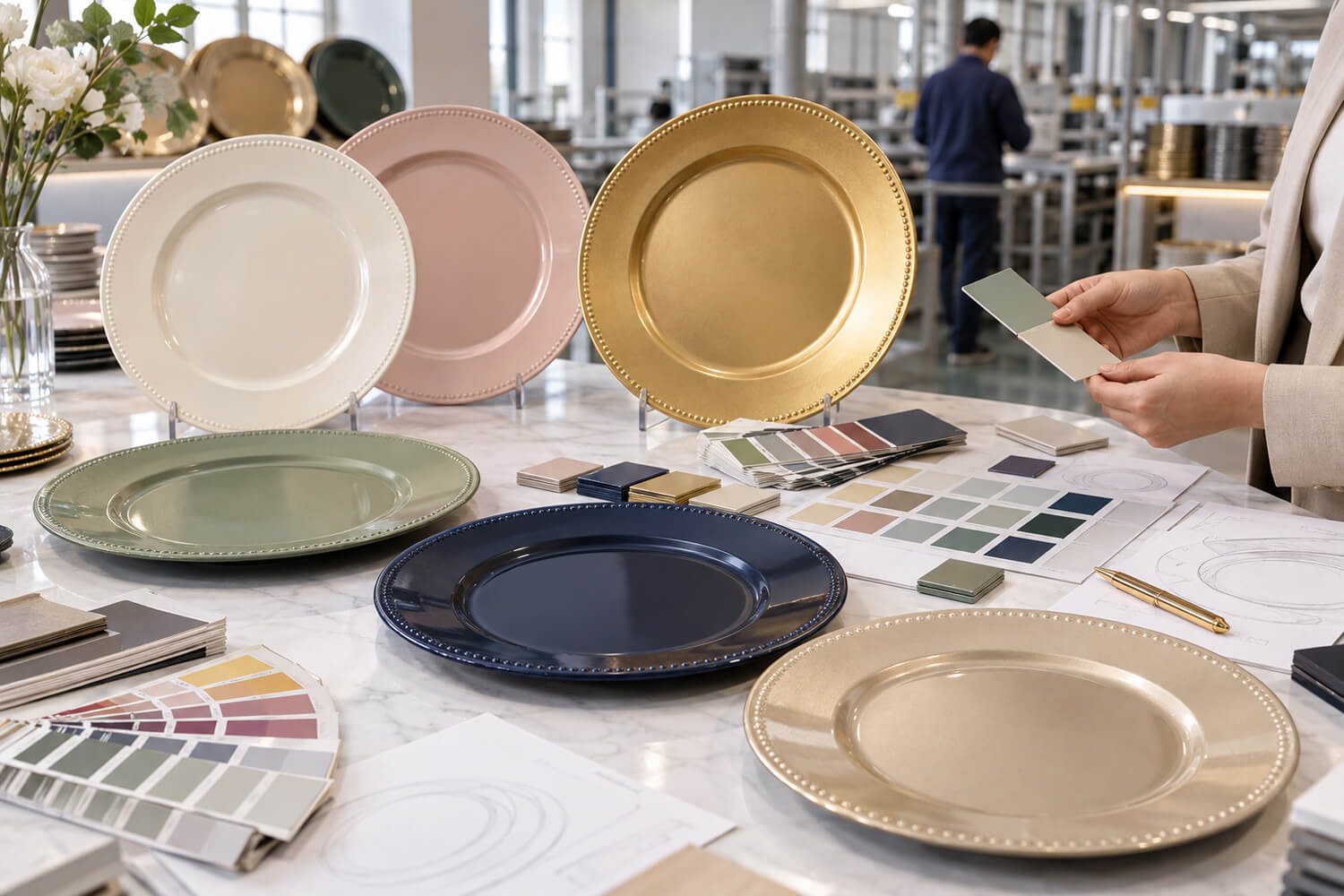
Choosing a Pantone color for a charger plate is not simply a matter of sending a color code to a factory. For reliable production, you should define the Pantone reference, plastic material, surface finish, manufacturing process, physical sample, and acceptable color tolerance before mass production begins. That sounds like a lot, but the process is […]
Plastic Charger Plate Quality Inspection: 12 Critical Checks for Reliable Bulk Orders
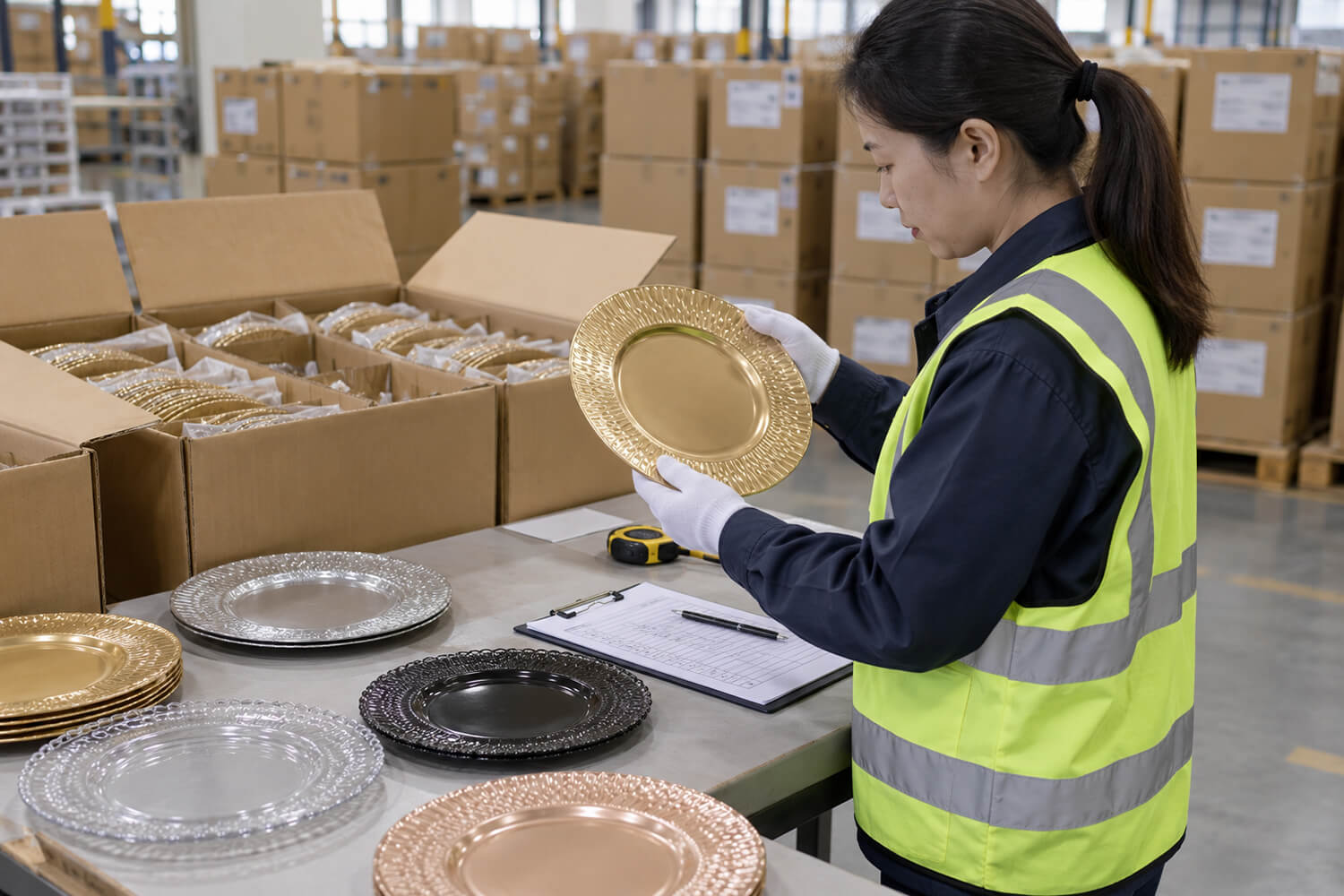
Plastic Charger Plate Quality Inspection should verify appearance, dimensions, flatness, surface finishing, material consistency, decoration, packaging, quantity, and buyer-specific requirements before shipment. For bulk orders, the inspection plan should be based on an approved specification and sample. A structured sampling method can then be used to decide whether the production lot meets the agreed quality […]
Custom Logo Charger Plates: 6 Powerful Printing Methods Explained
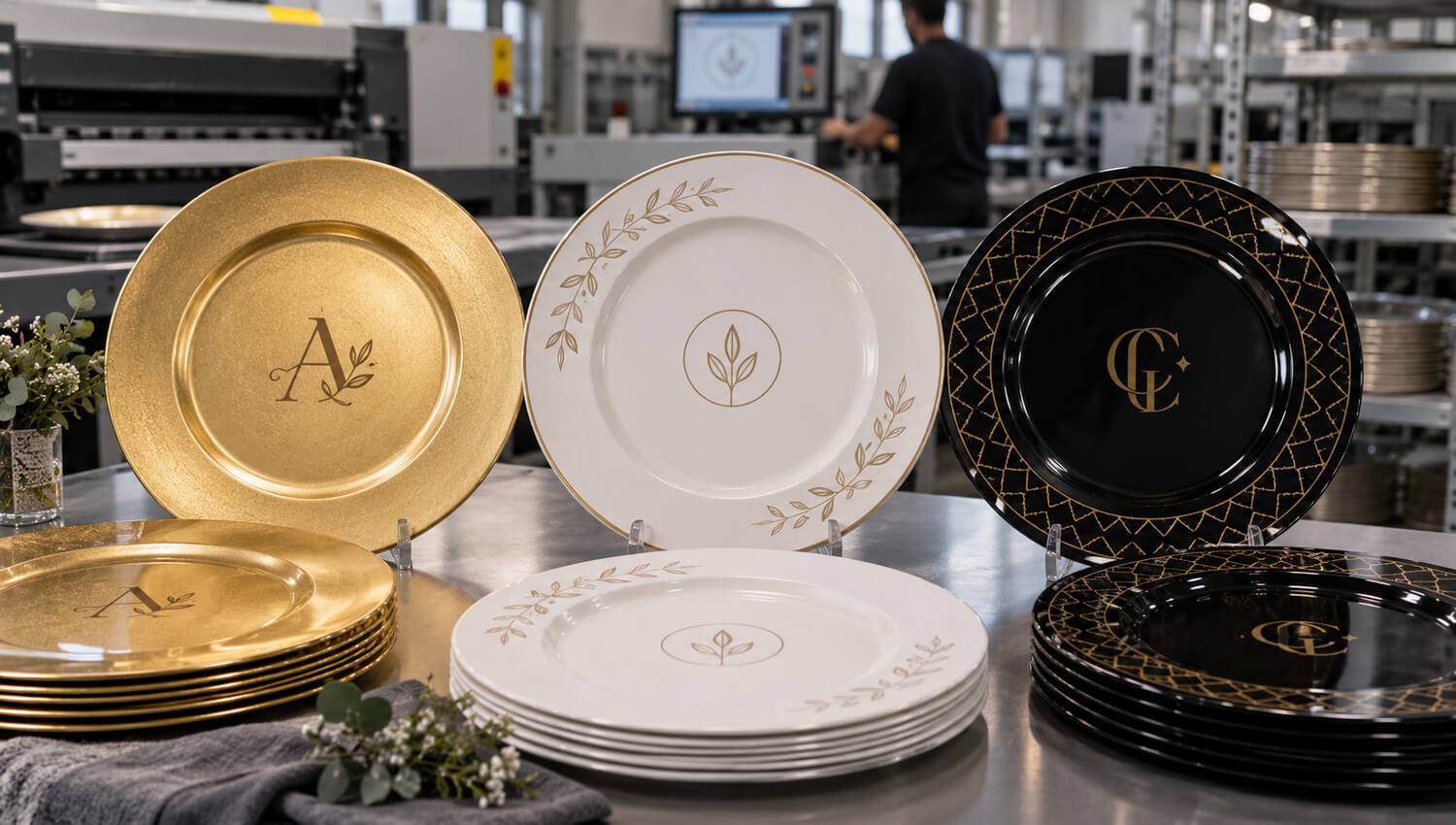
Custom Logo Charger Plates can be decorated through UV printing, screen printing, pad printing, heat transfer, decals, and other surface processes. The right method depends on your artwork, plate material, quantity, required durability, color accuracy, and target price. For buyers, choosing the process before mass production helps control cost while reducing color, adhesion, and appearance […]
Plating vs Spray Painting Charger Plates: 7 Critical Differences
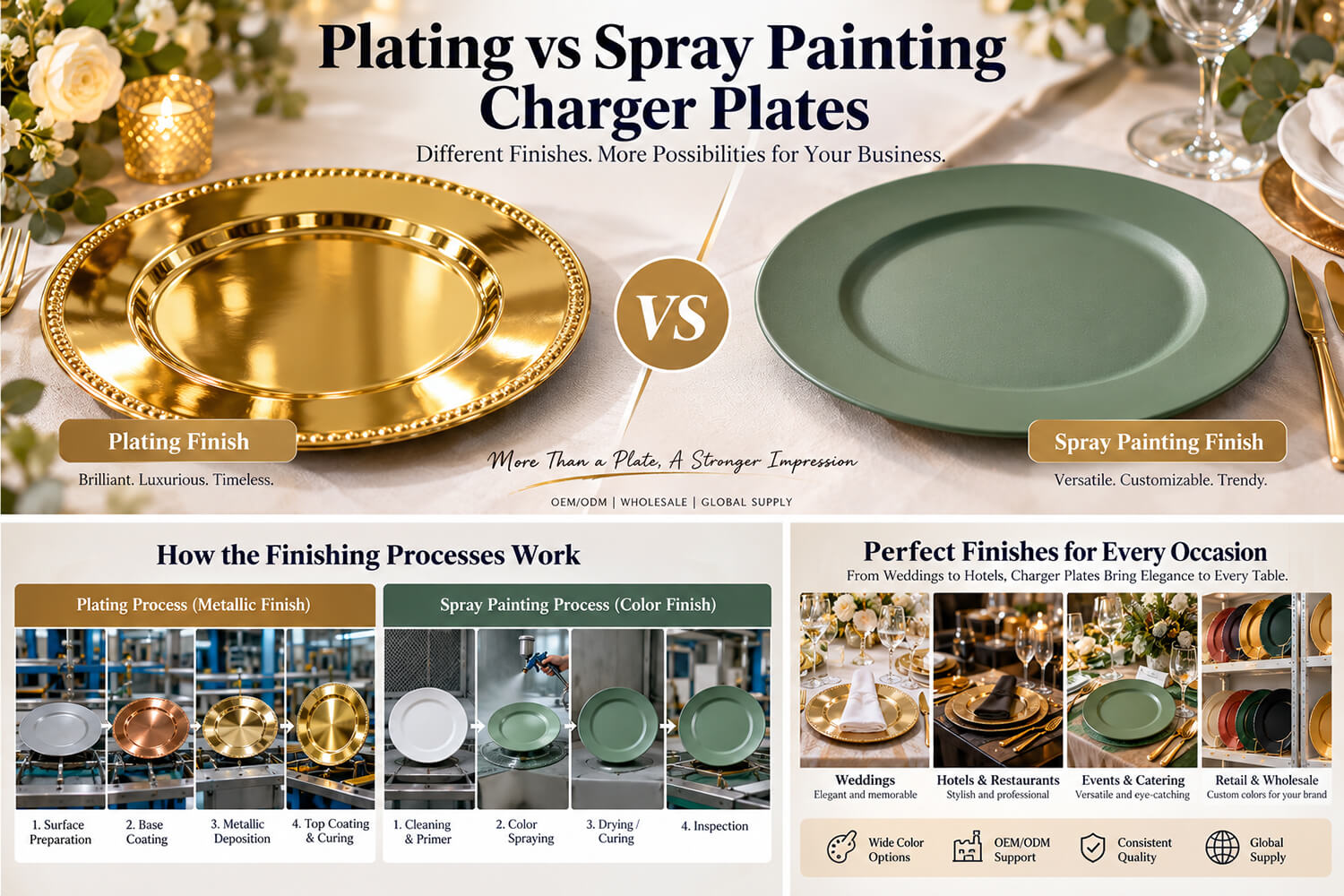
Plating and spray painting create very different finishes on decorative charger plates. Plating is usually preferred when you need a bright, reflective, metallic appearance, while spray painting offers greater flexibility in colors, textures, and lower-volume customization. For B2B buyers, the better choice depends on your target price, required appearance, order volume, packaging, durability expectations, and […]
UV Printing vs Paper Decal for Plastic Charger Plate: 7 Critical Differences for Better B2B Buying
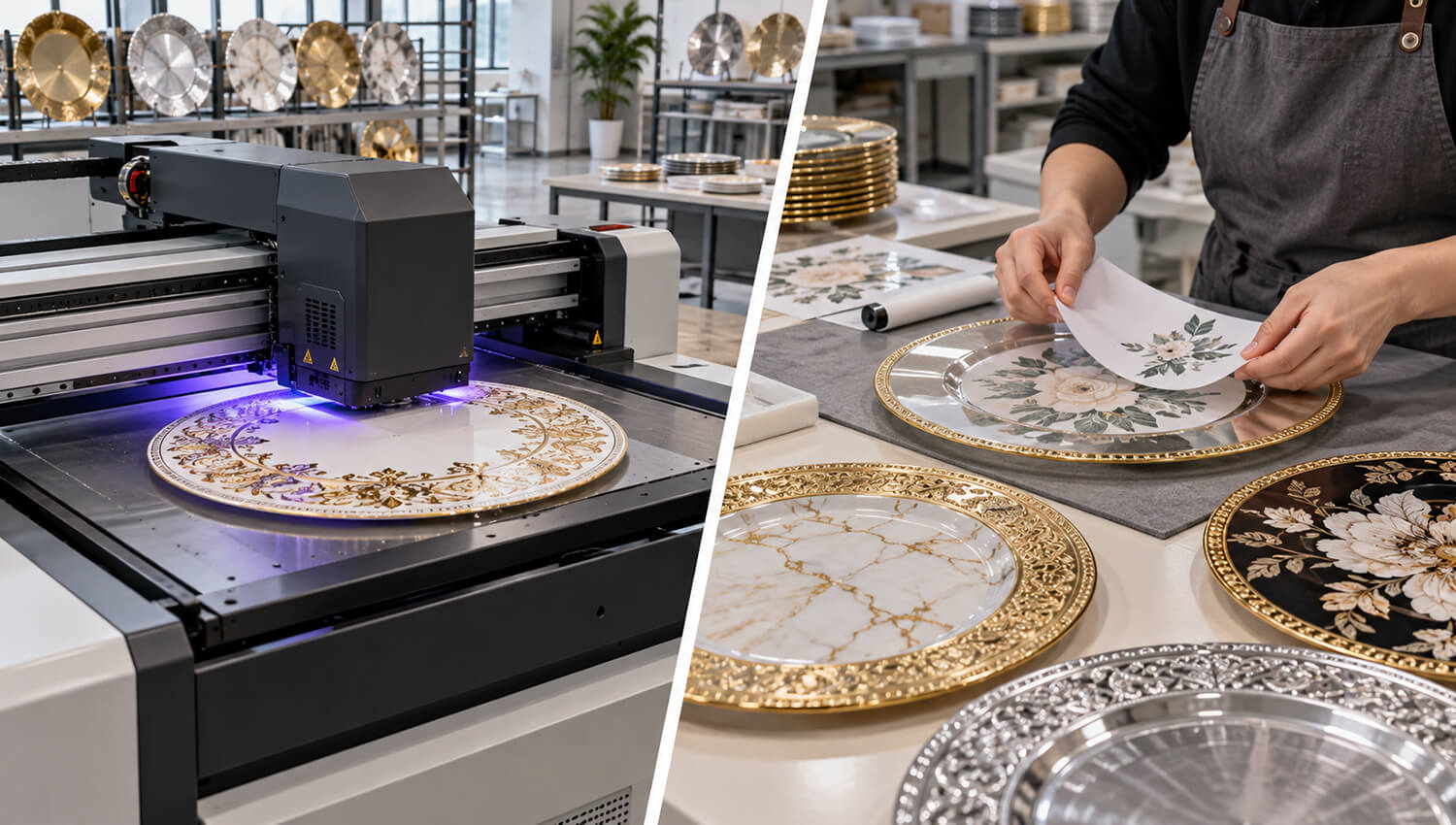
For plastic charger plates, UV Printing vs Paper Decal mainly comes down to how the decorative image is added to the product. UV printing normally places ink directly onto the plastic surface and cures it quickly with ultraviolet light. A paper decal uses a separately printed decorative layer that is transferred, bonded, or otherwise applied […]
Guide d'emballage des assiettes de service en plastique pour l'expédition en vrac : 7 méthodes éprouvées pour éviter des dommages coûteux
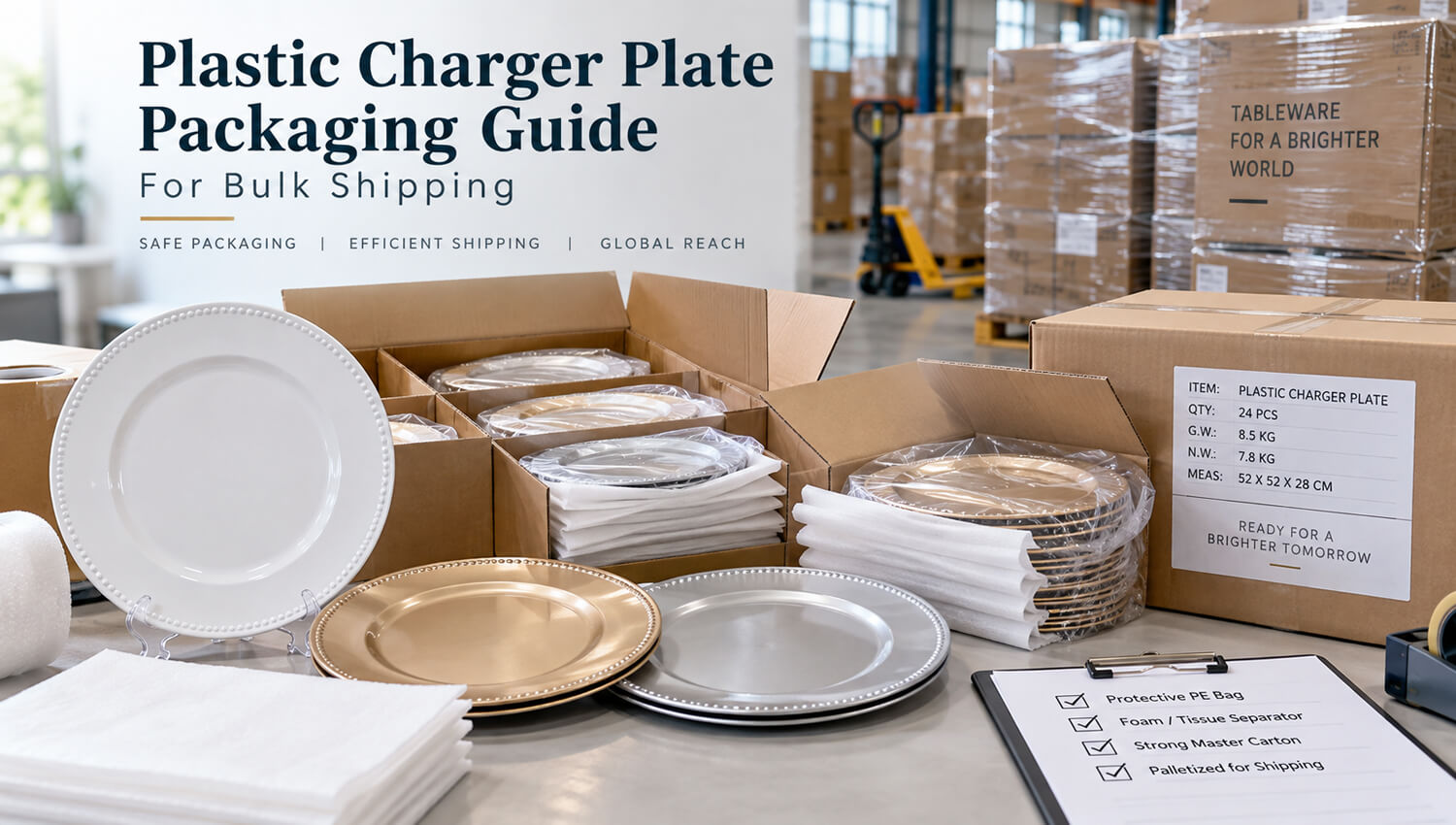
Good Plastic Charger Plate Packaging protects plates from scratches, pressure, moisture, deformation, and carton damage during international shipping. For bulk orders, the best system normally combines individual surface protection, controlled nesting, strong export cartons, pallet or container securing, and clear shipping marks. The exact packing method should match the plate material, finish, order quantity, shipping […]
Comment importer des assiettes de présentation en plastique depuis la Chine : 9 étapes indispensables pour un approvisionnement plus sûr
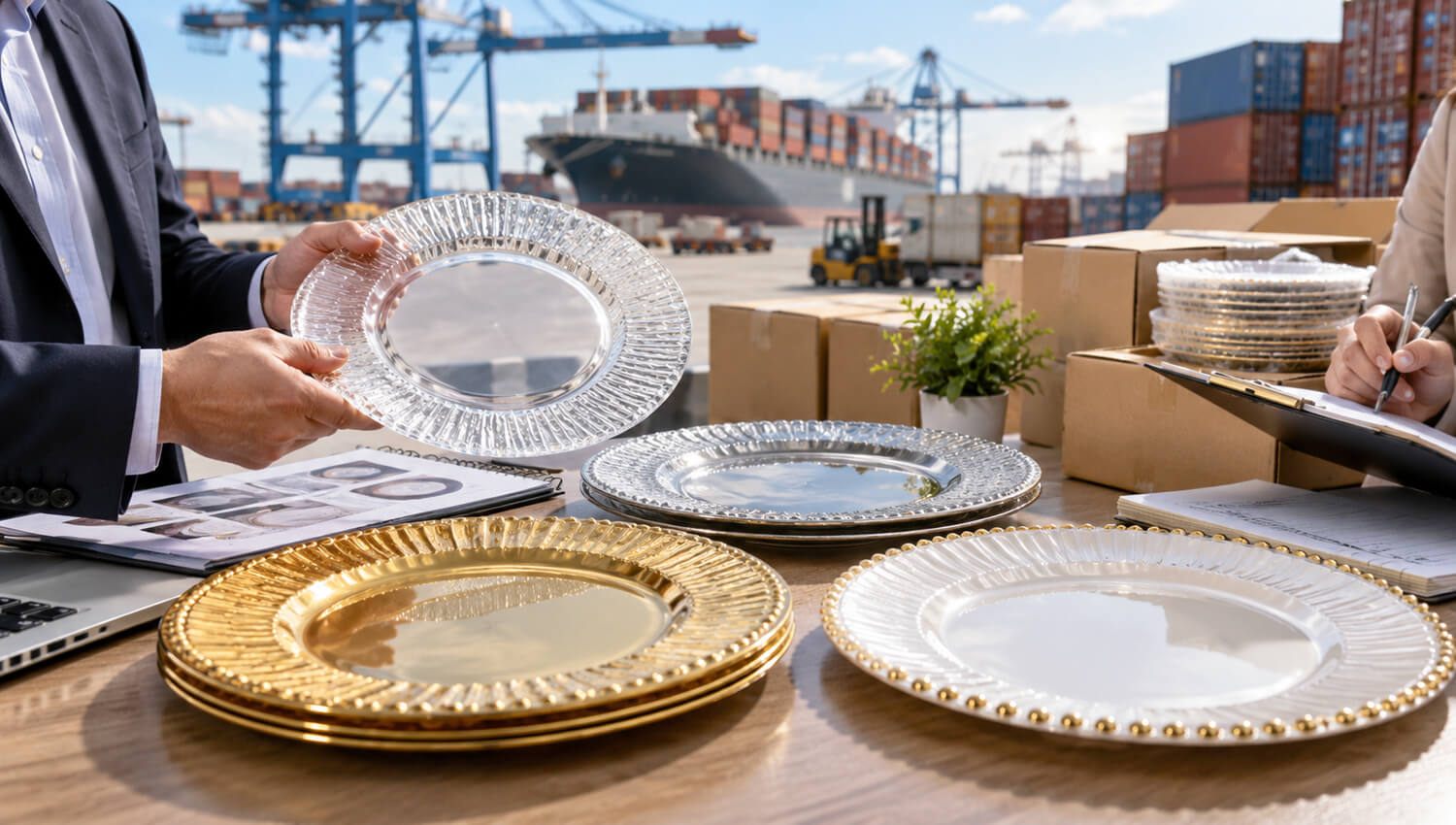
To import plastic charger plates successfully, you need to define the product first, verify a suitable Chinese manufacturer, approve samples, confirm compliance, control production quality, choose clear shipping terms, and prepare customs documents before the goods leave China. For B2B buyers, the safest process is not simply finding the lowest quotation. It is building a […]
Les assiettes de présentation sont-elles adaptées à un usage alimentaire ? 7 faits essentiels à connaître
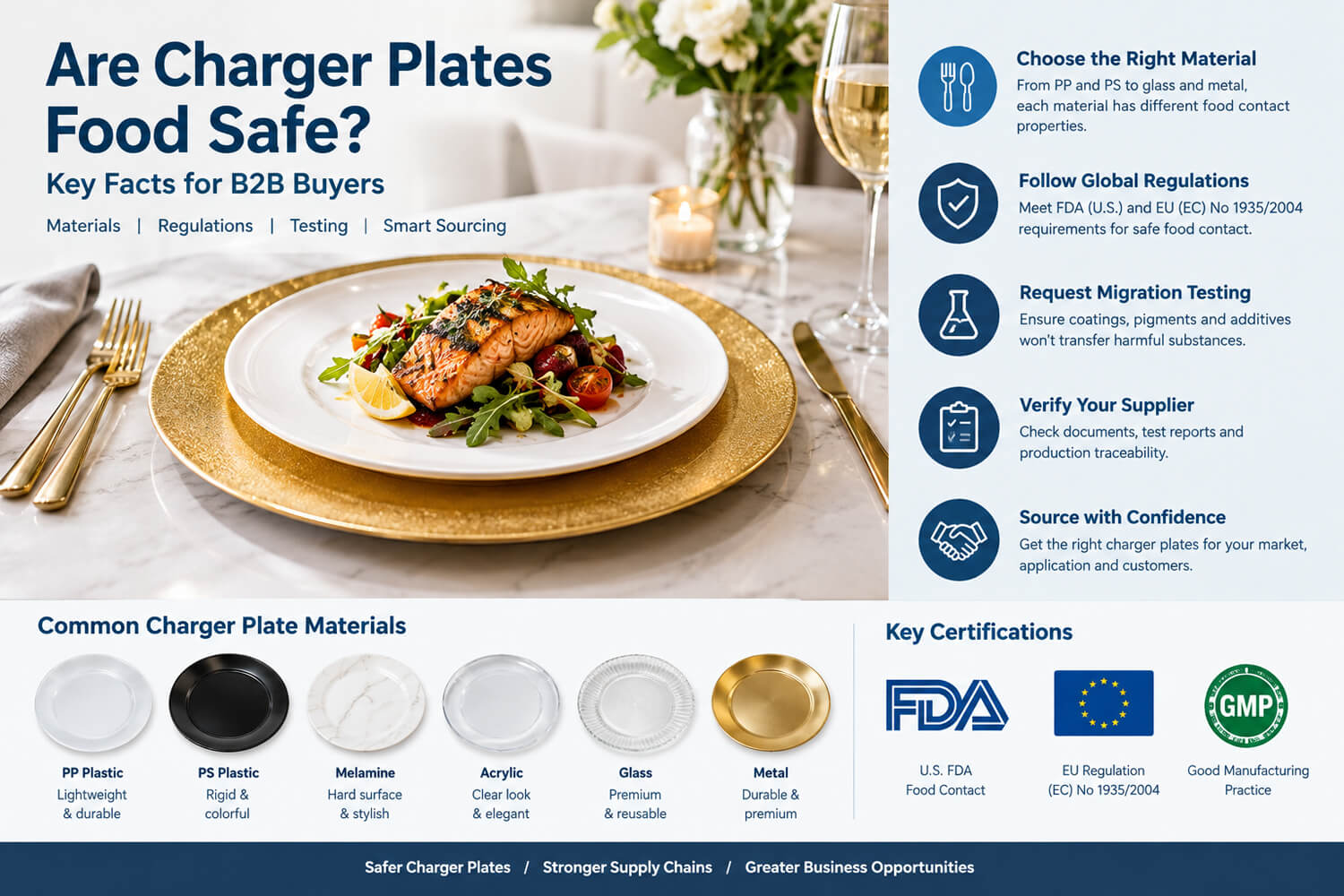
Are Charger Plates Food Safe? Yes, charger plates can be food safe, but not every charger plate is designed or tested for direct food contact. A charger plate is traditionally used underneath a dinner plate as a decorative base. Because food normally doesn’t touch it, many decorative models aren’t manufactured to the same requirements as […]
Pourquoi utilise-t-on le PP pour les assiettes de présentation en plastique ?
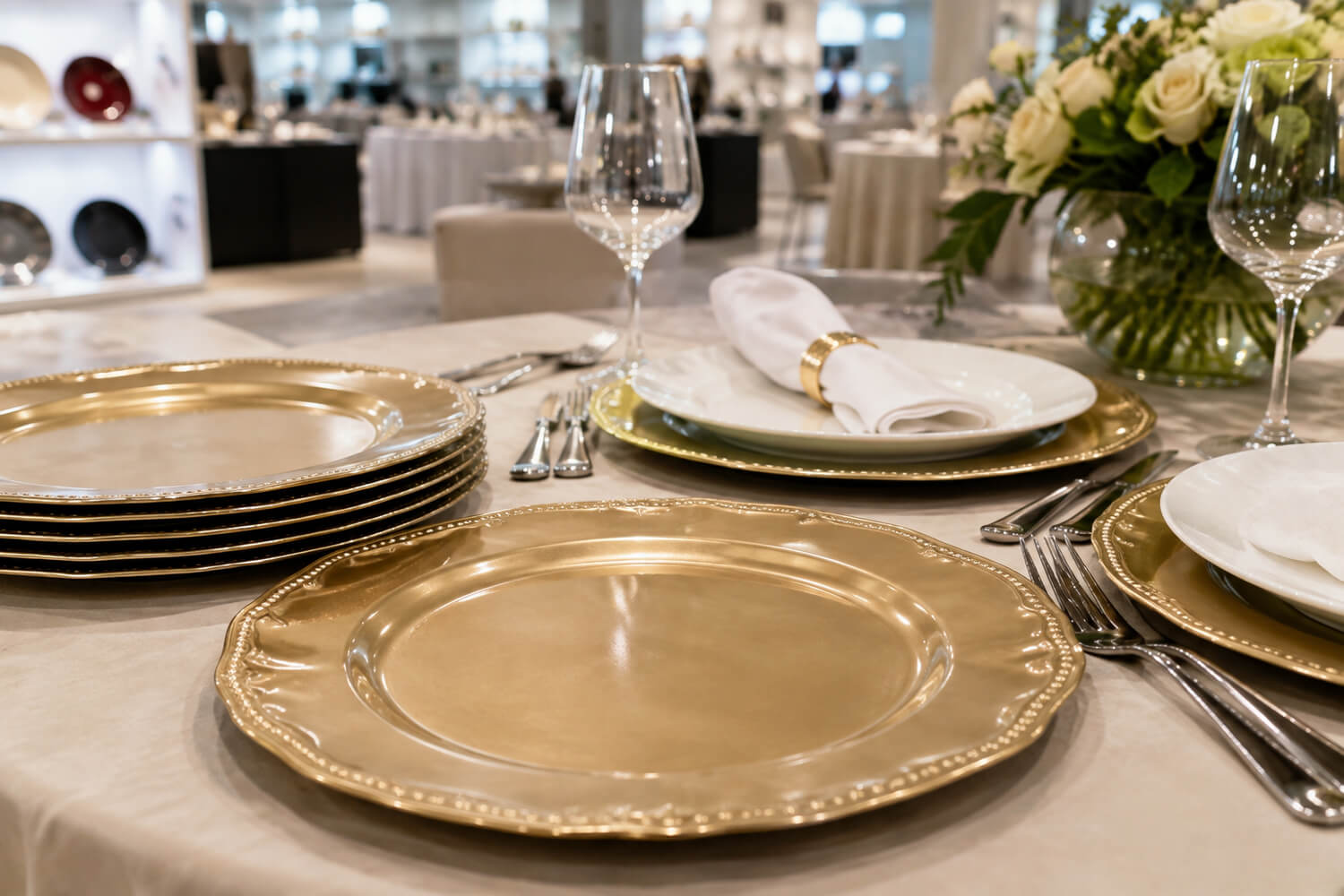
Polypropylene, usually called PP, is widely used for plastic charger plates because it combines toughness, low weight, heat resistance, manufacturing efficiency, and design flexibility. For B2B buyers, those characteristics can translate into fewer broken plates, easier transportation, dependable production, and more options for custom colors and decorative surfaces. A charger plate has a rather unusual […]
Assiettes de service en PP ou en PS : 7 différences essentielles

When comparing PP vs PS Charger Plates, the main difference is how the two plastics behave. PP, or polypropylene, is generally tougher and more flexible, so it handles impacts and repeated movement well. PS, or polystyrene, is usually harder and more rigid, which can create a crisp shape and attractive decorative surface. For B2B buyers, […]